
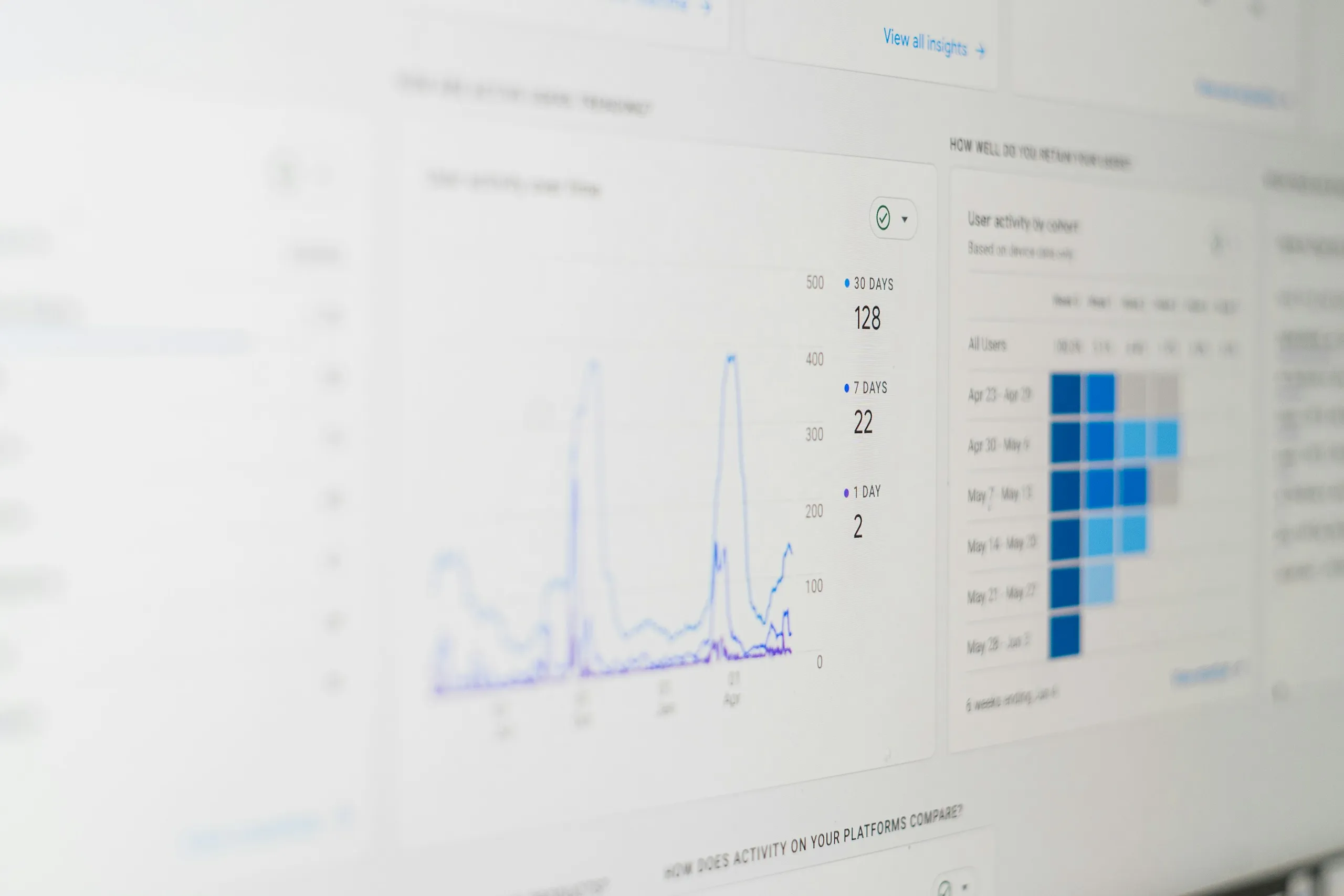
Every business that advertises eventually asks the same question: is this money actually working? Performance marketing is the discipline built around answering it. Instead of judging campaigns by reach and likes, it ties every rupee of spend to a result you can count — a lead, a call, a sale — and keeps adjusting until the cost of each result comes down.
This guide explains the numbers that matter, why tracking has to come before any serious budget, how to think about the journey from first click to purchase, and how to test and scale campaigns without guessing.
What performance marketing means
Performance marketing is advertising held to measurable outcomes. It usually runs on platforms where spend can be adjusted daily and results tracked precisely — search ads, social ads, and shopping campaigns. Its defining features are a clear target for each campaign, accurate tracking, and a steady cycle of testing and reallocating budget.
The numbers that matter
| Metric | What it measures | Why it matters |
|---|---|---|
| Cost per lead (CPL) | Spend ÷ number of leads | What each enquiry costs you |
| Cost per acquisition (CPA) | Spend ÷ number of sales or sign-ups | What each customer costs you |
| Return on ad spend (ROAS) | Revenue from ads ÷ ad spend | How much each rupee of spend brings back |
| Conversion rate | Conversions ÷ visitors | How well your page turns traffic into action |
| Customer lifetime value | Profit a customer brings over time | How much you can afford to pay for one |
Tracking comes before spending
Ad platforms optimise towards whatever you tell them is a success. If tracking is missing or wrong, they optimise towards the wrong thing, and your reports will not match reality. Before scaling any budget:
- Define the actions that count: form submissions, calls, WhatsApp clicks, purchases.
- Set up analytics and a tag manager so every conversion is recorded consistently.
- Send conversions to each ad platform — for Meta, server-side through the Conversions API as well as the browser pixel.
- Test every conversion end to end before a campaign goes live.
- Check that platform numbers roughly agree with your own records of leads and sales.
Meta documents its Conversions API, and Google covers conversion tracking for Google Ads. Browser tracking alone misses a growing share of conversions, which is why server-side signals have become standard practice.
Thinking in funnels
Very few people buy the first time they see an ad. Performance marketing plans for the whole journey:
- Awareness — reaching new people who match your best customers.
- Consideration — giving interested visitors a reason to come back: offers, proof, answers.
- Conversion — making the final step clear and easy.
- Retention — bringing existing customers back, often the cheapest sale of all.
Retargeting — showing ads to people who visited but did not act — is often where the lowest cost per result is found, because those people already know you.
Landing pages and conversion
Sending paid traffic to a generic home page wastes money. A landing page built for one campaign usually converts far better:
- One clear offer and one clear action.
- A headline that matches the ad the visitor clicked.
- Proof: reviews, results, logos, guarantees.
- A short form, or a direct WhatsApp or call button.
- Fast loading on mobile, where most paid traffic arrives.
Testing and scaling
Good performance marketing is a series of controlled experiments. Change one thing at a time — the creative, the audience, the offer, or the page — and give each test enough budget and time to show a real difference. When something wins, move budget towards it gradually; sudden large increases often push costs up while the platform relearns.
Reporting that tells the truth
A useful report answers four questions in plain language: how much was spent, what it produced, what it cost per result, and what will change next month. Vanity numbers such as impressions and reach can be included for context, but they should never be the headline.
Mistakes worth avoiding
- Scaling spend before conversion tracking has been tested.
- Judging campaigns on clicks and likes rather than leads and sales.
- Sending paid traffic to a slow or generic page.
- Changing several things at once, so nobody knows what worked.
- Ignoring the customers you already have.
Frequently asked questions
Regular advertising often aims at awareness and is judged on reach. Performance marketing sets a measurable target — cost per lead, cost per sale, or return on ad spend — and adjusts campaigns until it is met.
Final thoughts
Performance marketing is less about clever ads than about honest measurement. When every result is tracked and every rupee is accounted for, decisions stop being opinions and start being evidence.
Get tracking right first, build pages that convert, test patiently, and scale what works. That is the whole method — and it works because it is boring.